
Chromatography
A chromatography column is a glass tube that holds a stationary phase, such as silica gel, while the solvent flows through it and separates the compounds in a mixture. WUBOLAB makes glass chromatography columns for flash and gravity column chromatography: spherical-socket, reservoir, heavy-wall, fritted-disc and short vacuum columns, plus solvent reservoirs, for wholesale and OEM orders.
Products Catalogue
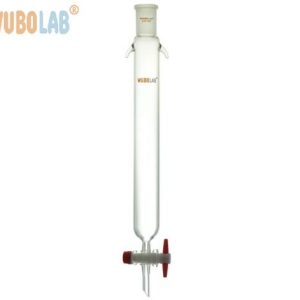
Chromatography Column Heavy Wall Design
Chromatography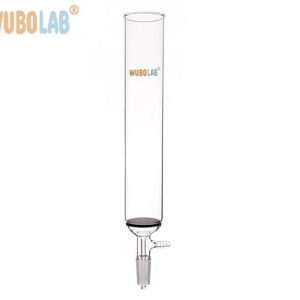
Chromatography Column Modified
Chromatography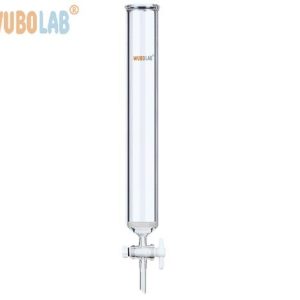
Chromatography Column PTFE Stopcock Fritted Disc
Chromatography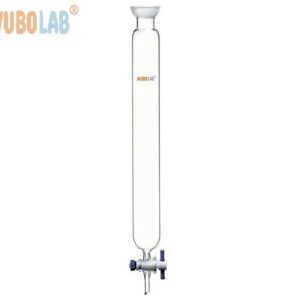
Chromatography Column Spherical Socket
Chromatography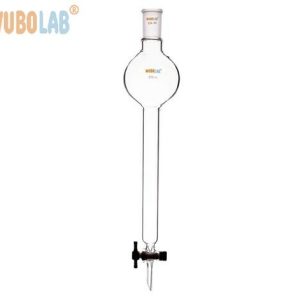
Chromatography Column with Reservoir
Chromatography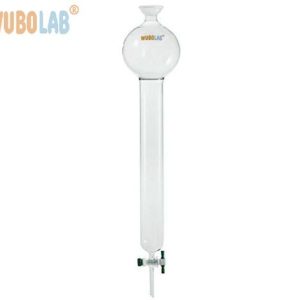
Chromatography Column with Reservoir Spherical Socket
Chromatography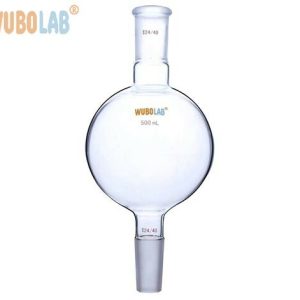
Chromatography Reservoir
Chromatography
Glass Chromatography Column Manufacturer And Supplier
WUBOLAB manufactures glass chromatography columns for flash and gravity column chromatography and supplies them to laboratories, distributors and OEM buyers. The range covers flash columns with 35/20 spherical joints, columns with a built-in solvent reservoir, heavy-wall columns with PTFE stopcocks, fritted-disc columns, short columns for vacuum work and separate solvent reservoirs, in O.D. from 13 mm to 90 mm. WUBOLAB has made laboratory glassware in Shenzhen, China, for more than 20 years, works under ISO 9001 certified quality management and supplies laboratories in more than 20 countries.
What A Chromatography Column Is Used For
A chromatography column is a glass tube that holds the stationary phase, usually silica gel or alumina, while the solvent (mobile phase) runs down through it. The compounds in a mixture travel at different speeds, so they leave the column in separate fractions. In the laboratory, glass columns are used to:
- Purify reaction products in organic synthesis, the most common use.
- Run flash chromatography, where gentle air or nitrogen pressure on top of the column speeds up the flow.
- Run gravity column chromatography, where the solvent flows by its own weight.
- Run dry-column vacuum chromatography on a short, wide column under vacuum.
- Separate natural product extracts into fractions for further analysis.
The main parts of a glass chromatography column are the tube, a stopcock at the bottom to control the flow, a fritted disc or a cotton plug to hold the packing, and a joint at the top for a solvent reservoir, an adapter or a pressure line.
Column Types And Sizes
| Column | Features and sizes |
|---|---|
| Column with spherical socket | 35/20 spherical joint used with a pinch clamp for a quick, tight connection under pressure (flash chromatography); 2 mm stopcock bore; also with fritted disc Sizes: O.D. 17–46 mm (I.D. 13.4–40 mm); effective length 12 in (305 mm) or 18 in (457 mm) |
| Column with reservoir, spherical socket | Solvent reservoir on top, 35/20 spherical joint; also with fritted disc Sizes: O.D. 17–46 mm; effective length 8–18 in (203–457 mm); reservoir 100–500 ml |
| Column with reservoir | Solvent reservoir with 24/40 outer joint at the top; 2 or 4 mm stopcock bore; also with fritted disc Sizes: O.D. 17–80 mm; effective length 8–18 in (203–457 mm); reservoir 100–1000 ml |
| Heavy wall column | General purpose flash column with PTFE stopcock and 24/40 outer joint at the top; heavy wall for safety Sizes: O.D. 17–60 mm; effective length 8–24 in (203–610 mm) |
| Fritted disc column | Coarse fritted disc to support the packing, PTFE stopcock, reinforced beaded top Sizes: O.D. 13–80 mm; effective length 8–24 in (203–610 mm) |
| Modified short column | Lower 24/40 joint and hose connection for vacuum; coarse or medium porosity Sizes: O.D. 40, 60 or 90 mm; length 200–400 mm |
| Chromatography reservoir | Extra solvent volume above the column; 24/40 or 29/42 socket and cone, or Rodaviss joint Sizes: 100–2000 ml |
Each product page lists the code for every size, for example C10053218 for the spherical-socket column with 32 mm O.D., 26 mm I.D. and 18 in (457 mm) effective length.
How To Choose A Chromatography Column
- Flash chromatography under pressure: a column with a 35/20 spherical socket and pinch clamp, or the heavy wall column.
- Sample size: wider columns take larger sample loads. The range runs from 13 mm O.D. for small samples to 80 mm O.D. for preparative work.
- Less refilling: a column with a built-in reservoir, or a separate reservoir of up to 2000 ml.
- Packing support: a fritted disc column holds the stationary phase without a cotton or glass wool plug.
- Vacuum or dry-column work: the modified short column with a lower 24/40 joint and vacuum hose connection.
Related glassware: column adapters and other glass adapters, stopcocks, round bottom flasks and laboratory funnels.
How To Pack And Run A Glass Column
- Clamp the column upright and close the stopcock. If the column has no fritted disc, put a small plug of cotton or glass wool at the bottom and a thin layer of sand on top of it.
- Fill the column with silica gel, either as a slurry in the starting solvent (wet packing) or dry and then wetted with solvent. Tap the column so the bed settles evenly, without air bubbles or cracks.
- Add a thin layer of sand on top of the silica to protect the surface, then load the sample in a small volume of solvent.
- Add solvent from the top or from the reservoir, open the stopcock and collect the fractions. For flash chromatography, apply gentle air or nitrogen pressure at the top.
- Keep the solvent level above the top of the silica at all times, and check the fractions by TLC.
Chromatography Column Price And Quotation
Chromatography column prices depend on the diameter, length, joint type, stopcock, fritted disc, reservoir, quantity and packaging. WUBOLAB quotes wholesale prices per product code: send the codes or the O.D., length and joint you need, with the quantity per item and destination country. Inquiries are answered within 12 hours.
Wholesale, OEM And Custom Columns
Columns, reservoirs, adapters and stopcocks can be combined in one wholesale order, shipped with secure export packaging. Private labeling is available. Columns with other diameters, lengths, joints, stopcock bores or frit porosities are made from your drawing or sample through the custom glassware service: technical review, prototype for approval, then mass production.
FAQ
What is the difference between flash and gravity column chromatography?
In gravity column chromatography the solvent flows down by its own weight, which is simple but slow. In flash chromatography gentle air or nitrogen pressure is applied at the top, so a separation takes minutes instead of hours. Flash columns need a joint that stays tight under pressure, such as the 35/20 spherical joint with a pinch clamp.
What is the difference between a 24/40 joint and a 35/20 spherical joint?
A 24/40 joint is a standard taper ground joint that fits standard reservoirs, adapters and flasks. A 35/20 spherical (ball and socket) joint is held with a pinch clamp, connects quickly and stays tight when pressure is applied for flash chromatography.
What sizes of chromatography columns are available?
From 13 mm to 90 mm O.D., with effective lengths from 8 in (203 mm) to 24 in (610 mm) depending on the type, and reservoirs from 100 ml to 2000 ml. Other sizes can be made to order.
Do the columns come with a fritted disc?
Fritted disc versions are available for the spherical-socket columns and both columns with reservoir, and as the PTFE stopcock fritted disc column. The modified short column comes in coarse or medium porosity.
How much does a glass chromatography column cost?
The price depends on the size, joint, stopcock, fritted disc and quantity. Send the product codes and quantities to get a wholesale price.
Can you make columns to a custom length or diameter?
Yes. Send a drawing or sample with the diameter, length, joints and stopcock you need, and WUBOLAB will confirm feasibility and make a prototype for approval.
Request A Quote
Need flash chromatography columns, reservoirs or custom columns in bulk? Contact WUBOLAB with the products, quantities and destination country, and we will confirm availability and pricing.