
Laboratory Bottles
Laboratory bottles are glass containers used to store, mix, dispense and transport reagents, solvents, culture media and samples. WUBOLAB is a manufacturer and supplier of laboratory glass bottles in clear and amber (brown) borosilicate glass: GL45 media bottles, narrow and wide mouth reagent bottles, dropping, BOD, aspirator, density and gas washing bottles, from 5 ml to 20 L, for wholesale and OEM orders.
Products Catalogue
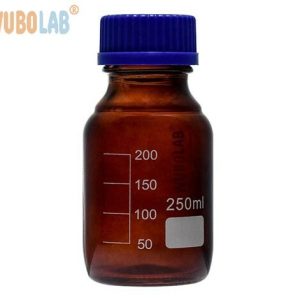
Amber Media Lab Bottles Screw Cap
Laboratory Bottles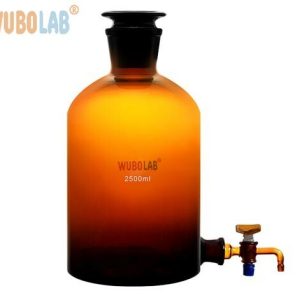
Aspirator Bottles
Laboratory Bottles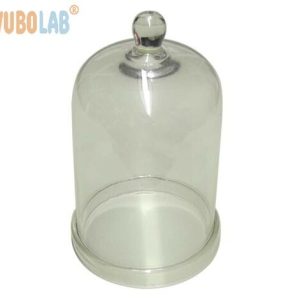
Bell Jars Glass Display with Knob Clear Wholesale
Laboratory Bottles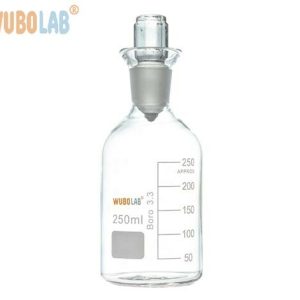
Biological Oxygen Demand (BOD) Bottles
Laboratory Bottles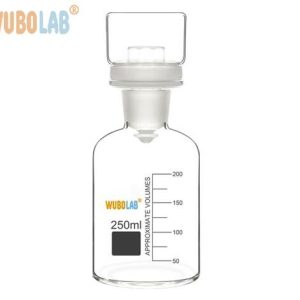
BOD Bottles with Double Cap
Laboratory Bottles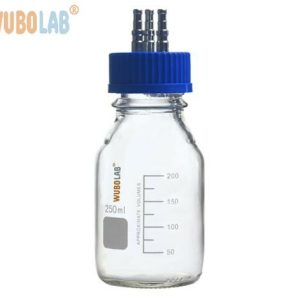
Bottles Screwcap Triple Hose Connector
Laboratory Bottles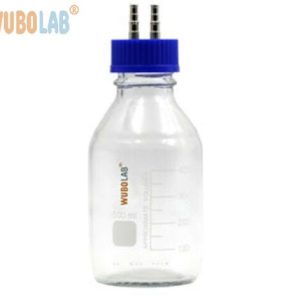
Bottles Screwcap Twin Hose Connector
Laboratory Bottles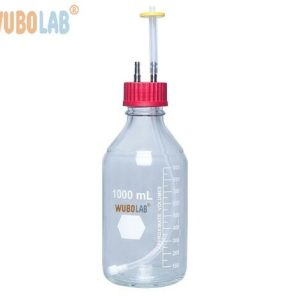
Bottles Screwcaps Connection System
Laboratory Bottles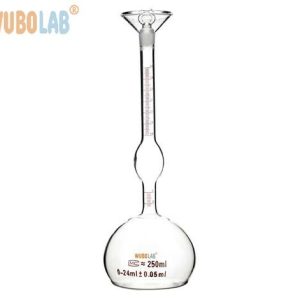
Cement Solid Specific Gravity Density Bottle Pycnometer
Laboratory Bottles
Conical Seeds Bottle
Laboratory Bottles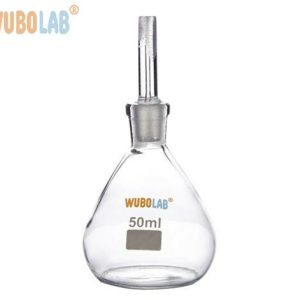
Density Bottles Adjusted
Laboratory Bottles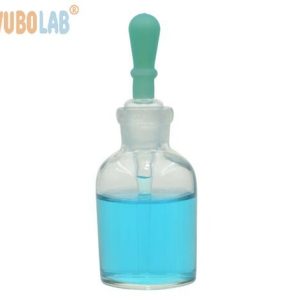
Dropping Bottles
Laboratory Bottles
Laboratory Glass Bottle Manufacturer And Supplier
WUBOLAB manufactures laboratory glass bottles in clear and amber (brown) borosilicate glass and supplies them to laboratories, distributors and OEM buyers. The range covers GL45 media bottles, narrow and wide mouth reagent bottles with ground glass stoppers, dropping bottles, BOD bottles, aspirator bottles, density and specific gravity bottles, weighing bottles, gas washing bottles, specimen jars and bell jars, from 5 ml to 20 L. Media, reagent, dropping, BOD and aspirator bottles are all made in both clear and amber glass. WUBOLAB has made laboratory glassware in Shenzhen, China, for more than 20 years, works under ISO 9001 certified quality management and supplies laboratories in more than 20 countries.
What Laboratory Bottles Are Used For
Laboratory bottles are the glass containers of the chemistry and biology lab. They are used to:
- Store reagents, solvents and prepared solutions, sealed with a screw cap or a ground glass stopper.
- Prepare, autoclave and pour culture media and buffers in media bottles.
- Protect light-sensitive chemicals in amber (brown) glass.
- Dispense liquids drop by drop from dropping bottles, or in larger volumes from the stopcock of an aspirator bottle.
- Test water and wastewater in BOD bottles.
- Measure density of liquids and solids with density bottles (pycnometers).
- Weigh samples in weighing bottles, and wash or dry gases in gas washing bottles and drying towers.
- Keep and display samples in specimen jars, seed bottles and bell jars.
Types Of Laboratory Bottles: Names And Uses
- Media bottle (laboratory bottle with screw cap): a round borosilicate glass bottle with a GL45 screw thread, polypropylene cap and drip-free pouring ring, made to ISO 4796. Used to mix, autoclave and store culture media, buffers and solutions, for use up to 140 °C. Made in clear and amber glass, in a square shape that saves up to 20% of shelf space, and with a wide mouth (GLS 80) for powders, pastes and viscous liquids.
- Reagent bottle: a bottle with a ground neck and glass stopper, made to ISO 4796-2, used to store chemicals. Narrow mouth reagent bottles are for liquids; wide mouth reagent bottles are for solids and powders.
- Amber bottle (brown glass bottle): any of these bottles in amber glass, used for chemicals that break down in light. WUBOLAB amber media bottles absorb UV light up to 500 nm.
- Dropping bottle: a small bottle with a dropper pipette and rubber teat, used to dispense indicators and reagents one drop at a time.
- BOD bottle: a bottle for the biochemical oxygen demand (BOD5) test of water and wastewater. Its rounded shape pushes all the air out as it is filled, and a flared mouth with a glass stopper seals the sample. Also made with a double cap.
- Aspirator bottle: a large bottle with a stopcock near the bottom, used to store and dispense distilled water and solutions, or to let solids settle and drain off the clear liquid.
- Density bottle (pycnometer, specific gravity bottle): a bottle with an exact, engraved volume, used to measure the density of liquids. Made as a Gay-Lussac type to ISO 3507, with thermometer, and as a specific gravity bottle for cement and solids.
- Weighing bottle: a flat-bottomed glass container with a ground glass stopper, used to weigh solid samples accurately; tall form or low form.
- Gas washing bottle: a bottle that bubbles a gas through a liquid to remove impurities, saturate a liquid with a gas or dry a gas stream; also with a fritted cylinder. A gas drying tower holds a solid drying agent.
- Kipp’s apparatus: a gas generator that makes hydrogen, carbon dioxide or hydrogen sulfide from a solid and a liquid at room temperature, without heating.
- Specimen jar, seed bottle and bell jar: a specimen jar with a ground knobbed lid seals without a rubber or plastic gasket; a conical seed bottle stores and displays grain, seeds, tea and powders; a glass bell jar covers instruments and samples, or holds a vacuum.
- Screwcaps with hose connectors: polypropylene caps for GL45 media bottles with twin or triple hose connectors, or a two- or three-port connection system, used to move liquids between bottles in a closed, sterile system.
Bottle Sizes And Standards
| Bottle | Standard, features and sizes |
|---|---|
| Media lab bottles | ISO 4796; clear or amber (UV absorbent up to 500 nm); polypropylene cap and pouring ring; for use up to 140 °C; GL25 (25 ml), GL32 (50 ml), GL45 (100 ml and up) Sizes: 25–20,000 ml |
| Square media bottles | Up to 20% space saving; GL32 (100 ml) or GL45 Sizes: 100–1000 ml |
| Wide mouth media bottles | GLS 80 thread for filling and pouring powders, pastes and viscous liquids; autoclavable |
| Narrow mouth reagent bottles | ISO 4796-2; ground neck with glass stopper; clear or amber Sizes: 30–20,000 ml |
| Wide mouth reagent bottles | ISO 4796-2; ground neck with glass stopper; clear or amber Sizes: 30–20,000 ml |
| Dropping bottles | Borosilicate glass 3.3; polypropylene stopper, pipette with rubber teat; clear or amber Sizes: 30, 60 and 125 ml |
| BOD bottles | Glass stopper; clear or amber; also with double cap Sizes: 250, 500 and 1000 ml |
| Aspirator bottles | Glass stopper and stopcock; clear or amber Sizes: 1000–20,000 ml |
| Density bottles | ISO 3507, Gay-Lussac type, exact volume engraved; also with thermometer (25 and 50 ml) and for cement and solids (250 and 500 ml) Sizes: 5–100 ml |
| Weighing bottles | Borosilicate glass 3.3; ground glass stopper Sizes: low form 40–80 mm diameter; tall form 25–45 mm diameter |
| Gas washing bottles | Plain or with fritted cylinder (coarse or extra coarse); drying towers 250–2000 ml Sizes: 125, 250 and 500 ml |
| Kipp’s apparatus | Gas generator for solid and liquid reagents Sizes: 125–1000 ml |
| Specimen jars | Ground knobbed lid, no gasket Sizes: 45–150 mm diameter, 60–450 mm high |
| Bell jars and seed bottles | Bell jars with knob, 120–250 mm inner diameter; conical seed bottles 125–500 ml |
| GL45 screwcaps | Polypropylene, to 140 °C, autoclavable; twin or triple hose connector for 6–9 mm I.D. tubing, optional 0.2 µm venting filter; connection system for 1.6–6.0 mm O.D. tubing |
Each product page lists every product code with its capacity and dimensions.
How To Choose A Laboratory Bottle
- Clear or amber: amber (brown) glass for light-sensitive chemicals, standards and media; clear glass when you need to see the contents, level and color.
- Screw cap or glass stopper: GL45 media bottles for media, buffers, autoclaving and daily pouring; reagent bottles with ground glass stoppers for storing chemicals.
- Narrow or wide mouth: narrow mouth for liquids; wide mouth for powders, solids and viscous liquids.
- Dispensing: dropping bottles for small amounts; aspirator bottles for larger volumes such as distilled water.
- Testing: BOD bottles for water analysis, density bottles for density, weighing bottles for weighing samples.
- Closed transfer: GL45 screwcaps with hose connectors to move liquids between bottles without opening them.
Related glassware: beakers, funnels, flasks, stopcocks and desiccators.
Glass Bottles Wholesale Price And OEM
Bottle prices depend on the type, capacity, clear or amber glass, closure, quantity and packaging. WUBOLAB quotes wholesale prices per product code, for example B20011000 for a 1000 ml clear GL45 media bottle. Send the product codes, or the type and capacity you need, with the quantity per item and the destination country. Inquiries are answered within 12 hours. Distributors can combine bottle types and other glassware in one order, shipped in secure export packaging, and private labeling is available. Bottles with special capacities, threads, necks or stoppers are made from your drawing or sample through the custom glassware service.
FAQ
What are the main types of laboratory bottles?
Media bottles with screw caps, reagent bottles with glass stoppers, dropping bottles, BOD bottles, aspirator bottles, density bottles (pycnometers), weighing bottles and gas washing bottles. Most of them are made in clear and amber glass.
What is a reagent bottle used for in the laboratory?
A reagent bottle stores chemicals in liquid or solid form. The ground glass stopper closes it tightly; narrow mouth bottles hold liquids and wide mouth bottles hold solids and powders.
Should I choose amber or clear bottles?
Choose amber (brown) glass for chemicals that are sensitive to light; WUBOLAB amber media bottles absorb UV light up to 500 nm. Choose clear glass for routine storage when you want to see the contents.
Can media bottles be autoclaved?
Yes. Media lab bottles to ISO 4796 are made of borosilicate glass for use up to 140 °C, and the screw cap and pouring ring are autoclavable.
Which thread sizes do the media bottles use?
Most media bottles use the GL45 thread. The 25 ml bottle uses GL25, the 50 ml bottle and the 100 ml square bottle use GL32, and wide mouth media bottles use GLS 80.
What sizes do you supply?
From 5 ml density bottles to 20,000 ml (20 L) media bottles, reagent bottles and aspirator bottles.
Can you supply OEM labeling and bulk packaging?
Yes. Private labeling is available, and bulk orders are shipped in secure export packaging. Tell us your labeling and packaging needs with the quantities and destination country.
Request A Quote
Need media bottles, reagent bottles or amber glass bottles in bulk? Contact WUBOLAB with the products, quantities and destination country, and we will confirm availability and pricing.