In the precise world of laboratory experiments, mastering the skill of reading a burette accurately is crucial. Burettes are essential tools in volumetric analysis, particularly in titrations, where they measure the volume of a liquid with high precision. This guide provides a systematic approach to burette reading, ensuring accuracy and reliability in your laboratory measurements.
What is a burette?
A burette is a long, cylindrical piece of glassware, marked with a scale, and equipped with a tap at the bottom. It is designed to dispense known volumes of a liquid, especially in titrations. The accurate reading of a burette’s scale is crucial for the success of volumetric analysis.
How to read a buret?
The Art of Reading the Meniscus
The meniscus is the curved surface of a liquid in the burette. For accurate readings:
Eye Level: Ensure your eye is level with the meniscus to avoid parallax errors.
Center of the Meniscus: For clear liquids, read the bottom of the meniscus. For opaque liquids, align the top of the liquid with the scale mark.
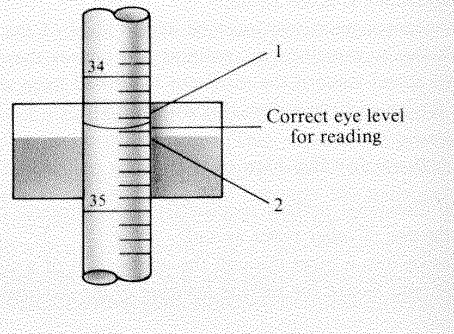
Use of Aids: A white card with a black line behind the burette can enhance visibility and accuracy.
Steps for Accurate Burette Usage
Cleaning: Start with a clean burette to avoid contamination. Rinse it with the solution to be used.
Filling: Fill the burette above the zero mark, ensuring no air bubbles are present.
Initial Volume: Record the starting volume, aligning your eye with the meniscus.
Performing Titration: Carefully dispense the liquid, observing the change in volume.
Final Volume: Note the final volume at the end of the titration, again at eye level with the meniscus.
Volume Calculation: The difference between the initial and final volumes gives the dispensed volume.
Electronic Burettes: A Modern Twist
Electronic burettes offer digital readings, eliminating the need for manual meniscus interpretation and enhancing precision.
Quality Glassware from WUBOLAB
When it comes to conducting precise laboratory experiments, the quality of glassware cannot be overstated. WUBOLAB, a leading laboratory glassware manufacturer, is your go-to source for top-quality glassware solutions. Our extensive product line includes glass beakers, wholesale glass bottles, boiling flasks, and laboratory funnels in various sizes and types, ensuring you can find the perfect glassware for your laboratory needs. Whether you’re measuring with a burette or conducting other laboratory procedures, WUBOLAB’s glassware stands for precision and reliability.
Common Mistakes and Solutions
Incorrect Eye Level: Always read at meniscus level.
Improper Cleaning: Use the solution you will be measuring for rinsing.
Misreading the Scale: Familiarize yourself with the scale intervals and markings.
How to Avoid Parallax Error in Burette Reading
Parallax error happens when your eye is not level with the meniscus. This causes the scale reading to appear too high or too low.
To avoid parallax error:
- Keep your eye at the same level as the meniscus
- Keep the burette vertical
- Use consistent lighting and a clear background
- Take readings calmly and avoid rushed measurements
How Many Decimal Places Should a Burette Reading Have?
Standard laboratory practice is to record burette readings to two decimal places (0.01 mL).
The last digit is estimated based on the scale graduation and visual interpolation.
Example correct format:
- 12.30 mL
- 12.35 mL
- 12.38 mL
Avoid rounding to one decimal place, as this reduces precision.
Common Mistakes When Reading a Burette
- Reading from above or below eye level
This creates parallax error and incorrect volume values. - Not removing air bubbles from the burette tip
Air bubbles lead to underestimation of delivered volume. - Misreading the meniscus
Reading the top instead of the bottom (for aqueous solutions) introduces error. - Recording insufficient decimal precision
Writing 12.3 mL instead of 12.30 mL reduces measurement quality. - Forgetting to record the initial reading
Without both initial and final values, delivered volume cannot be calculated correctly.
Quick Accuracy Checklist
Before each titration:
- Burette is clean and vertical
- No air bubbles in tip
- Eye level aligned with meniscus
- Reading recorded to 0.01 mL
- Initial and final readings both captured
FAQs
Q: how do you ensure the accuracy of a burette reading?
A: Accuracy is ensured through proper cleaning, correct eye level alignment, and careful reading of the meniscus.
Q: What is the correct way of reading or using the burette?
A: The correct method involves reading the meniscus at eye level and accurately recording the initial and final volumes.
Q: How accurate are Burets?
A: Burets are highly accurate, with some capable of measuring up to 0.05 mL.
Q: How should you properly observe a buret to ensure accuracy in its reading of solution?
A: Observe the buret at eye level, ensuring the meniscus aligns accurately with the scale mark.