
Laboratory Flasks
Products Catalogue
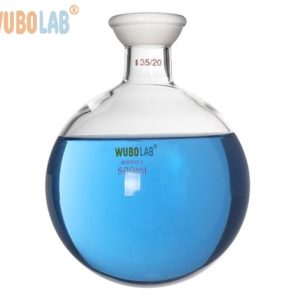
Round Bottom Flasks Spherical Socket
Laboratory Flasks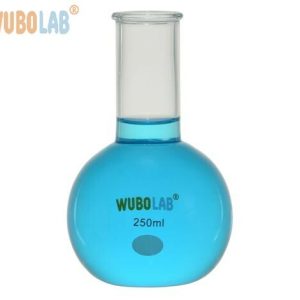
Single Long Neck Flat Bottom Boiling Flask
Laboratory Flasks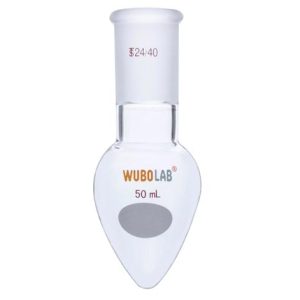
Single Neck Pear shaped Flasks
Laboratory Flasks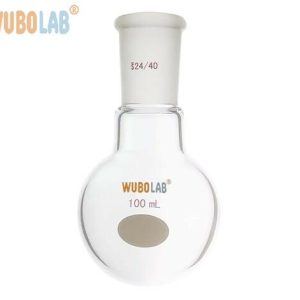
Single Neck Round Bottom Flasks
Laboratory Flasks
Three Necks Flasks Angled
Laboratory Flasks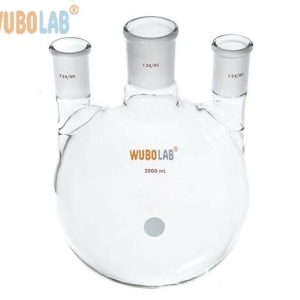
Three Vertical Necks Flasks
Laboratory Flasks
Two Necks Flasks Angled
Laboratory Flasks
Two Necks Pear shaped Flasks
Laboratory Flasks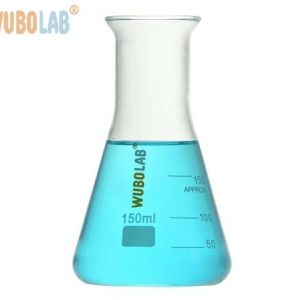
Wide Neck Conical Flasks
Laboratory Flasks
Wide Neck Flat Flange Reaction Flasks
Laboratory Flasks
Laboratory Flask Manufacturer And Supplier
WUBOLAB manufactures laboratory flasks, the science flasks used in chemistry and biology laboratories, schools and research, and supplies them to laboratories, distributors and OEM buyers. All flasks are made of borosilicate glass 3.3, which resists thermal shock and chemical attack. The range covers round bottom and flat bottom boiling flasks, multi-neck and pear-shaped flasks, conical (Erlenmeyer) flasks, Class A volumetric flasks, Büchner filtering flasks, distilling flasks and retorts, Kjeldahl, iodine, reaction and culture flasks, from 1 ml to 20,000 ml (20 L). WUBOLAB has made laboratory glassware in Shenzhen, China, for more than 20 years, works under ISO 9001 certified quality management and supplies laboratories in more than 20 countries.
Types Of Laboratory Flasks: Names And Uses
Laboratory flasks are named after their shape, their neck or the job they do. These are the common types of chemistry flasks, what each one looks like and what it is used for:
- Erlenmeyer flask (conical flask): a flat bottom, a conical body and a narrow neck, so liquids can be swirled and mixed without spilling. Used for mixing, heating, culturing and titration. Types of conical flasks: narrow neck, wide neck (recommended for titration), with ground socket, graduated with stopper and with screwcap for storing culture media.
- Volumetric flask: a flat bottom, a pear-shaped body and a long, narrow neck with one calibration mark. It holds one exact volume, for example 100 ml ±0.08 ml in Class A, and is used to prepare standard solutions and accurate dilutions. It is not a heating or reaction flask.
- Florence flask (boiling flask): a round body with a single long neck, used for boiling liquids and for distillation. WUBOLAB’s round bottom boiling flasks with narrow neck and single long neck flat bottom boiling flasks are of this type.
- Round bottom flask: a spherical bottom that spreads heat evenly, used for heating, reflux, distillation and rotary evaporation. It needs a clamp, ring or heating mantle to stand. Supplied with a ground joint or a spherical socket.
- Flat bottom flask: stands on a bench or hotplate without support. The long neck reduces evaporation and gives a safe point to clamp; also with ground socket for jointed glassware.
- Two-neck, three-neck and four-neck flasks: round bottom flasks with extra necks, so a condenser, thermometer, stirrer or dropping funnel can be fitted at the same time. Necks are angled (two necks), angled (three necks) or vertical; there are also three-neck flasks with a bottom outlet and four-neck flasks with a threaded side arm for a thermometer.
- Pear-shaped flask: a round bottom flask with a pointed bottom, so small volumes collect in one place. Made with a single neck or two necks.
- Recovery flask (rotary evaporator flask, eggplant flask): a heavy-wall flask for rotary evaporators that collects the product after the solvent is removed.
- Büchner flask (filter flask, vacuum flask, side-arm flask): a thick-walled conical flask with a side arm for vacuum tubing. With a Büchner funnel on top, it is used for vacuum filtration. Supplied with a plain side arm, a screwthread connector, a ground socket, an upper side arm or upper and lower side arms.
- Distilling flask: a round body with a side arm on the neck that carries the vapour to a condenser, used to separate liquids by boiling point.
- Retort: a distillation flask with a rounded body and a long neck bent downward, which carries the vapour away as it is heated.
- Kjeldahl flask: a round bulb with an extra-long neck that acts as an air condenser during digestion, used for nitrogen determination by the Kjeldahl method. Made with ground socket or with plain neck.
- Iodine flask: a conical flask with a ground socket and a cup-shaped top, used for iodine determination.
- Reaction flask: a wide-neck flask with a flat flange joint, closed with a lid and retaining clips. The wide neck takes stirrer paddles and makes solid residues easy to remove. The jacketed reaction flask has an outer jacket for circulating water or oil, for temperature-controlled reactions.
- Culture flask: used in biology to grow microbial, cell, plant or tissue cultures. Baffled culture flasks have four baffle indents for consistent agitation on a shaker; Florentine culture flasks are used for plant germination, seedlings, tissue and microbial culture.
- Fernbach flask: a large culture flask with a wide, flat bottom and a short neck, which gives the culture a large surface area.
Many of these names describe the same flask: a conical flask is an Erlenmeyer flask, a boiling flask is a Florence flask, and a filter flask, vacuum flask or side-arm flask is a Büchner flask.
Flask Sizes And Standards
| Flask | Standard, features and sizes |
|---|---|
| Round bottom boiling flasks, narrow neck | DIN ISO 1773 Sizes: 50–20,000 ml |
| Round bottom flasks with joint | Heavy wall, hand-blown from tubing for uniform wall thickness; joints 14/20 to 60/46; also with 35/20 spherical socket (500–2000 ml) Sizes: 5–10,000 ml |
| Flat bottom boiling flasks, long neck | Single long neck; also with socket to ISO 1773 and ISO 4797 (50–4000 ml, joints 19/22 to 45/50) Sizes: 50–20,000 ml |
| Two-, three- and four-neck flasks | Round bottom, heavy wall; two necks angled 10–1000 ml; three necks angled 10–2000 ml; three vertical necks 50–2000 ml; bottom outlet with 4 mm PTFE stopcock and four necks with threaded side arm, 500–2000 ml Sizes: 10–2000 ml |
| Pear-shaped and recovery flasks | Heavy wall; single neck or two necks 5–200 ml; rotary evaporator recovery flasks 5–1000 ml, joints 14/20 to 29/42 Sizes: 5–1000 ml |
| Conical (Erlenmeyer) flasks | Narrow neck to DIN ISO 24450, 5–10,000 ml; wide neck with white enamel graduations, 50–2000 ml; ground socket to ISO 4797, 5–2000 ml; graduated with stopper, clear or amber, 50–1000 ml; screwcap (PBT cap, PTFE-faced disc), 5–10,000 ml Sizes: 5–10,000 ml |
| Volumetric flasks | Class A, ISO 1042 and DIN 12664; clear or amber; polyethylene stopper; tolerance from ±0.020 ml (1 ml) to ±1.00 ml (5000 ml) Sizes: 1–5000 ml |
| Büchner filtering flasks | ISO 6556, heavy wall for vacuum work; plain side arm or PTFE screwthread connector (also DIN 12476), 100–5000 ml; ground socket, 100–1000 ml; upper side arm or upper and lower side arms, 125–20,000 ml Sizes: 100–20,000 ml |
| Distilling flasks and retorts | Distilling flask: side arm inclined at 75°, 140 mm long, 30–2000 ml; retort with ground-in glass stopper, 125–1000 ml Sizes: 30–2000 ml |
| Kjeldahl flasks | Ground socket or plain neck; extra-long neck Sizes: 30–1000 ml |
| Iodine flasks | BS 2735; clear or amber Sizes: 50–1000 ml |
| Reaction flasks | Wide neck flat flange, 75 or 100 mm flange bore, complete with lid and retaining clips; jacketed version 1000 and 2000 ml Sizes: 250–20,000 ml |
| Culture flasks | Baffled, four baffles, repeated autoclaving at 121 °C, 50–2000 ml; baffled with GL45 screwcap and gas-permeable PTFE membrane, 50–2000 ml; Florentine culture flasks, 250–1000 ml Sizes: 50–2000 ml |
Each product page lists every product code with its capacity, joint or neck size and dimensions.
How To Choose A Laboratory Flask
- Heating, boiling and reflux: round bottom flasks, which heat evenly; flat bottom flasks if the flask has to stand on a hotplate.
- Adding reagents, stirring or measuring temperature during a reaction: two-, three- or four-neck round bottom flasks.
- Mixing, swirling and titration: conical (Erlenmeyer) flasks; see also Erlenmeyer flasks.
- Exact volumes and standard solutions: Class A volumetric flasks; amber glass for light-sensitive solutions.
- Vacuum filtration: Büchner filtering flasks with a Büchner funnel.
- Distillation: distilling flasks with side arm, or round bottom flasks with a condenser and distillation glassware.
- Larger-scale or temperature-controlled synthesis: flat flange reaction flasks with lid and clips, or jacketed reaction flasks.
- Shaking cultures: baffled culture flasks; with a membrane screwcap when the contents must stay sterile.
Parts used with flasks: condensers, glass adapters, ground glass joints and stoppers.
Flask Price, Wholesale And OEM
Flask prices depend on the type, capacity, neck and joint sizes, quantity and packaging. WUBOLAB quotes wholesale prices per product code, for example F20280100 for a 100 ml clear Class A volumetric flask. Send the product codes, or the type, capacity and joints you need, with the quantity per item and the destination country. Inquiries are answered within 12 hours. Distributors can combine flask types and other glassware in one order, shipped in secure export packaging, and private labeling is available. Flasks with special necks, joints, angles or capacities are made from your drawing or sample through the custom glassware service.
FAQ
What are the main types of flasks used in a laboratory?
The most common are Erlenmeyer (conical) flasks, volumetric flasks, round bottom and Florence (boiling) flasks, flat bottom flasks and Büchner (filter) flasks. Special flasks include multi-neck, pear-shaped, distilling, retort, Kjeldahl, iodine, reaction and culture flasks.
What is the difference between an Erlenmeyer flask and a volumetric flask?
An Erlenmeyer flask is a conical flask for mixing, heating and titration, and its graduations are approximate. A volumetric flask has a long neck with one calibration mark and measures one exact volume, so it is used for standard solutions and dilutions, not for heating.
What is the difference between a round bottom and a flat bottom flask?
A round bottom flask heats evenly and is stronger under vacuum, but it needs a clamp, ring or heating mantle to stand. A flat bottom flask stands on its own on a bench or hotplate.
What material are your science flasks made of?
Borosilicate glass 3.3, which resists thermal shock and chemical corrosion. Screwcap and stopper materials, such as PBT, polypropylene, PTFE or polyethylene, are listed on each product page.
Which standards do your flasks meet?
Round bottom boiling flasks follow DIN ISO 1773, conical flasks DIN ISO 24450, ground socket flasks ISO 4797, volumetric flasks ISO 1042 and DIN 12664 (Class A), Büchner flasks ISO 6556 and iodine flasks BS 2735. Each product page lists the standard where one applies.
What sizes do you supply?
From 1 ml volumetric flasks to 20,000 ml (20 L) round bottom boiling flasks, flat bottom boiling flasks, Büchner flasks with side arms and flat flange reaction flasks.
Do you offer custom flasks for bulk orders?
Yes. Send a drawing, sketch or sample with the capacity, number of necks, joints and angles you need. WUBOLAB reviews feasibility, makes a prototype for approval and then produces the order.
Request A Quote
Need round bottom, conical or volumetric flasks in bulk? Contact WUBOLAB with the products, quantities and destination country, and we will confirm availability and pricing.